
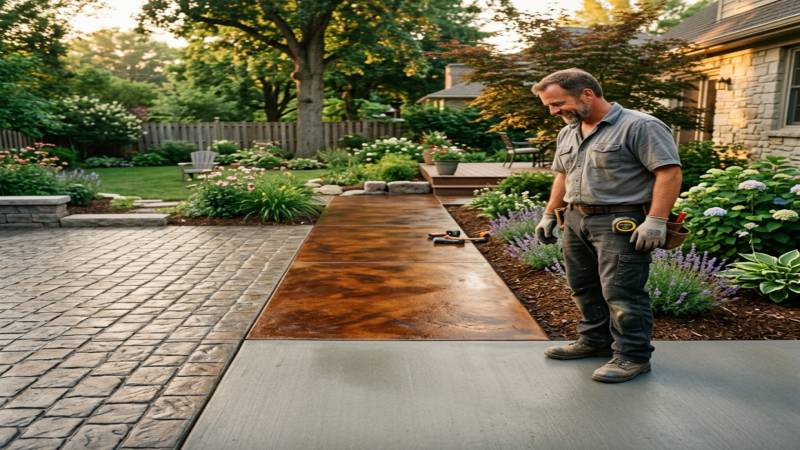
Your driveway, patio, or walkway does more than serve a function, it sets the tone for your entire property. And when it comes to concrete finishes, the choice you make today will shape how your home looks and performs for decades. A skilled local concrete contractor works with homeowners across the region to install concrete finishes that hold up beautifully under real-world conditions. But before picking up the phone, it helps to understand what each finish actually brings to the table.
Here’s an honest look at stamped, stained, and plain concrete, what each one offers, where each one shines, and which one might be the right fit for your home.
What Makes Stamped Concrete Stand Out?
Stamped concrete is exactly what it sounds like: freshly poured concrete pressed with textured molds before it sets. The result can mimic natural stone, brick, slate, or even wood—at a fraction of the cost of those materials.
For homeowners who want a high-end look without the high-end price tag, stamped concrete in Fort Wayne transforms ordinary driveways, patios, and pool decks into visually striking surfaces that hold up through harsh Midwest winters while adding real curb appeal and long-term property value. The patterns are pressed deep into the surface, and the color is mixed directly into the concrete or applied as a surface hardener, so it doesn’t fade the way paint would.
A few things to keep in mind:
- Maintenance: Stamped concrete should be sealed every two to three years to protect the pattern and color.
- Cost: It’s the most expensive of the three options, but the aesthetic return is significant.
- Versatility: Dozens of pattern and color combinations are available, which means it’s easy to match your home’s existing style.
Stamped concrete work is especially popular for patios and outdoor entertaining areas, where the visual impact is most noticed by guests.
What Is Stained Concrete—and Is It Right for Your Space?
Stained concrete works differently. Rather than adding texture, it adds color—either by reacting chemically with the concrete surface or by penetrating the slab with a water-based dye. The finish is smooth, and the color variation gives each slab a unique, almost marbled appearance.
Acid-based stains create earthy tones: browns, rusts, and greens that look like natural stone. Water-based stains offer a broader palette, including grays, blues, and bolder hues for homeowners who want something more contemporary.
Stained concrete works particularly well in:
- Covered patios and garages: Areas where the surface won’t be exposed to constant rain and heavy foot traffic.
- Indoor applications: Stained concrete floors are a popular interior design choice for their sleek, modern look.
- Renovations: If you have existing concrete that’s structurally sound but visually tired, staining can refresh it without a full replacement.
The one consideration? Stained concrete is still smooth concrete. It doesn’t add grip or texture, which matters if you’re planning an outdoor surface in a wet or shaded area.
Plain Concrete: Underrated and Built to Last
Plain concrete doesn’t get nearly as much attention as its decorative counterparts, but it remains one of the most practical choices available. A clean, well-finished broom-finish concrete slab is durable, low-maintenance, and timeless.
This is the go-to option for:
- Driveways: Plain concrete handles heavy vehicle loads exceptionally well.
- Utility areas: Sidewalks, garage floors, and service pads where function matters more than aesthetics.
- Budget-conscious projects: Plain concrete costs significantly less than stamped or stained finishes, and the savings can be redirected toward other home improvements.
Don’t mistake “plain” for “low quality.” The strength and longevity of a concrete slab depend far more on proper installation, mix ratios, base preparation, curing time, and joint placement, than on surface finish. A skilled contractor brings the same level of craftsmanship to plain concrete installations as to any decorative project.
Stamped vs. Stained vs. Plain: A Direct Comparison
| Feature | Stamped | Stained | Plain |
| Visual Impact | High | Medium–High | Low–Medium |
| Cost | Higher | Moderate | Lower |
| Maintenance | Moderate (seal every 2–3 years) | Low–Moderate | Low |
| Best For | Patios, pool decks, driveways | Indoor floors, covered areas | Driveways, walkways, utility |
| Slip Resistance | Good (textured surface) | Moderate | Good (broom finish) |
| Customization | Very high | High | Limited |
How Do You Choose the Right Concrete Finish for Your Home?
The answer really comes down to three factors: location, budget, and how much visual impact you want.
Choose stamped concrete if you’re working on a patio, entertainment area, or front driveway where aesthetics are a priority and you want something that stands out.
Choose stained concrete if you have an existing slab that needs refreshing, or if you’re finishing an interior floor or covered outdoor space where smooth, colorful concrete would shine.
Choose plain concrete if you need a reliable, cost-effective surface that performs well without demanding much maintenance. For functional spaces like side walkways, garage floors, and utility pads, plain concrete is hard to beat.
A knowledgeable local contractor can walk you through every option in detail, including what works best for the specific conditions of your property. Soil type, drainage, sun exposure, and local climate all factor into which finish will perform best long-term.
The Importance of Quality Installation
A concrete finish is only as good as the installation behind it. The right texture, color, or pattern means little if the slab wasn’t poured correctly, cured properly, or cut with adequate control joints. A quality contractor takes pride in doing the foundational work right, so your surface doesn’t just look great on day one, but continues to hold up for years after.
From the initial consultation to the final seal coat, hands-on expertise and attention to detail make the difference on every project, big or small.
Ready to See What’s Possible for Your Property?
Whether you’re leaning toward the bold texture of stamped concrete, the rich color of a stained finish, or the clean reliability of plain concrete, an experienced local team has the skills to bring your vision to life. Reach out today to discuss your project and get a quote tailored to your home.
Frequently Asked Questions
How long does stamped concrete last?
With proper sealing and maintenance, stamped concrete can last 25 years or more. Resealing every two to three years is the most important step in extending its lifespan.
Can stain be applied to old concrete?
Yes. Water-based and acid-based stains can both be applied to existing concrete slabs, as long as the surface is structurally sound and free from heavy coatings or sealers.
Is plain concrete slippery when wet?
A standard broom finish adds texture to the surface, which significantly improves grip when wet. It’s one reason plain concrete remains a popular choice for driveways and walkways.
Which concrete finish requires the least maintenance?
Plain concrete is the lowest-maintenance option. It doesn’t require periodic sealing like stamped concrete, and it doesn’t need the careful surface prep that stained concrete benefits from.
Does stamped concrete crack more than plain concrete?
All concrete can crack over time. Proper control joint placement during installation reduces cracking in any finish type.See More