
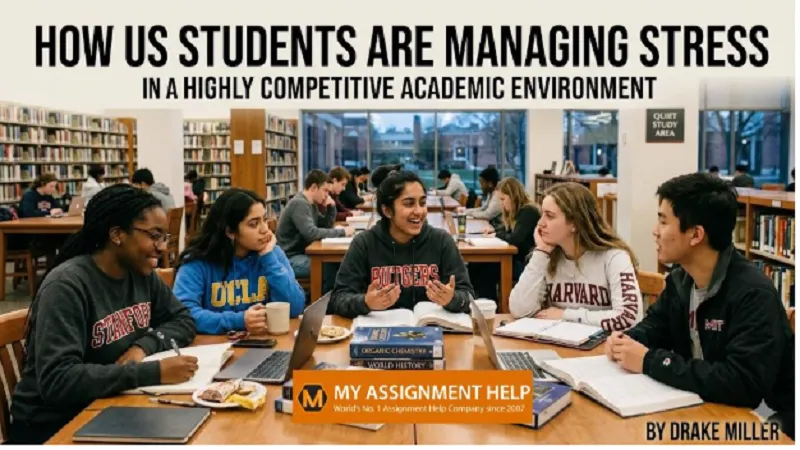
The American education system has long been celebrated as a land of opportunity, but for the millions of students navigating its halls in 2026, that opportunity comes with a heavy price tag: chronic stress. From the elite corridors of Ivy League universities to the high-stakes environment of suburban high schools, the pressure to perform has reached an all-time high.
In an era where “good” is no longer enough and “perfect” is the baseline, students are finding themselves caught in a relentless cycle of academic rigor, extracurricular padding, and the constant pursuit of a prestigious future. This blog explores the current landscape of academic stress in the US and the innovative, resilient ways students are fighting back to reclaim their mental well-being.
The State of the Union: Why Stress is Skyrocketing in 2026
According to recent data from the American Psychological Association (APA), teens and college students report stress levels during the academic year that far exceed what is considered healthy. But what exactly is fueling this fire?
1. The College Admissions Arms Race
For high school students, the goalpost for college admissions keeps moving. Today, students feel they need to be “pointy”—meaning they must demonstrate mastery in a niche area, lead multiple clubs, and clock hundreds of volunteer hours, all while maintaining a 4.0+ GPA. The pressure of Advanced Placement (AP) exams and the shifting landscape of SAT/ACT requirements have created a “holistic review” process that, while intended to be fair, has inadvertently forced students to become “super-performers” in every facet of life. Faced with these impossible standards, many find themselves searching for someone to do my homework for me just to keep their heads above water.
2. The Digital Comparison Trap & Achievement Envy
Social media has turned academic life into a spectator sport. Platforms like LinkedIn and Instagram allow students to see the highlight reels of their peers—internships at Fortune 500 companies, research grants, and “I am humbled to announce” posts. This constant comparison creates a “Fear Of Missing Out” (FOMO) regarding professional and academic achievements.
3. Economic Anxiety and the “ROI” of a Degree
With the rising cost of tuition and the looming shadow of student debt, the stakes of academic failure have shifted from social to financial. Many students feel that one “B” grade could jeopardize a scholarship, which in turn could jeopardize their entire financial future. To mitigate this risk without breaking their limited budgets, students often look for cheap assignment help at Myassignmenthelp.com to ensure their grades remain competitive.
How Students are Coping: From Survival to Mastery
While the pressures are mounting, US students are not merely passive victims of the system. They are developing sophisticated toolkits to manage their mental health. Today’s most successful students are focusing on academic workload management and evidence-based study techniques to stay ahead. If you find yourself overwhelmed by these demands, remember that professional resources can provide the necessary structural support to balance your workload effectively.
1. Reclaiming Time through Radical Prioritization
The modern student has moved beyond simple to-do lists. Many are adopting the Eisenhower Matrix to distinguish between what is urgent and what is actually important.
By setting hard boundaries—such as “no homework after 10 PM”—students are trying to protect their sleep cycles, which are often the first casualty of academic stress.
2. The Rise of “Soft Saving” for Mental Health
Mirroring the financial trend of “soft saving” (focusing on quality of life over aggressive retirement saving), students are opting for “soft academic” periods. This involves intentionally taking a lighter course load during one semester or choosing electives that spark joy rather than just padding a resume. This “intentional deceleration” is becoming a badge of honor among students who prioritize longevity over burnout.
3. Peer Support and De-Stigmatization
One of the most positive shifts in US schools is the vocal advocacy for mental health. Student-led organizations are creating spaces where it is okay to admit to struggling. By normalizing the conversation around therapy and medication, students are reducing the “shame” that used to accompany academic burnout.
The Role of Technology: A Double-Edged Sword
In 2026, the mastery of Digital Skills is no longer optional—it is a survival mechanism.
1. The Era of Agentic AI Writers
Students are no longer just using search engines; they are leveraging Agentic AI—autonomous tools that help clarify complex concepts, summarize dense academic papers, and provide 24/7 tutoring. This reduces the “friction” of learning, allowing students to overcome academic roadblocks without the high cost of private in-person tutoring.
2. Mindfulness and Productivity Apps
Tools like Calm, Headspace, and specialized “Deep Work” timers are frequently integrated into university wellness programs. These apps help students enter a “flow state,” making their study hours more efficient and leaving more room for rest.
Actionable Tips for Students to Manage Academic Pressure
- Practice the “Rule of Three”: Each day, identify three non-negotiable tasks. Once those are done, give yourself permission to stop.
- Seek External Support Early: Don’t wait until you are failing to ask for help. Utilizing expert guidance for academic workload management can help bridge the gap when your schedule becomes unmanageable.
- Redefine Success: The most resilient students are those who decouple their self-worth from their GPA.
- Use the Pomodoro Technique: Work for 25 minutes, then take a 5-minute break. This prevents cognitive fatigue and keeps the brain sharp.
Frequently Asked Questions
Q.1 What are the most common signs of academic burnout in US students?
Academic burnout typically manifests as chronic exhaustion, a cynical or detached attitude toward schoolwork, and a significant drop in productivity. Students may also experience physical symptoms like headaches or sleep disturbances.
Q.2 How can I balance extracurriculars with a heavy course load?
The key is Time Blocking. Instead of multitasking, dedicate specific “blocks” of your day to one activity only. High-performing students often use a digital calendar to treat their extracurricular activities and study sessions as non-negotiable professional appointments.
Q.3 Are AI tools allowed in US high schools and universities?
Most institutions in 2026 have moved toward “AI Literacy” rather than bans. While policies vary, the focus is on the ethical use of Agentic AI for research, brainstorming, and tutoring, provided the final work remains a product of the student’s own critical thinking.
Q.4 How do I request a mental health day in school?
In states like Oregon and Washington, mental health days are legally recognized as excused absences. For other states, it is best to communicate openly with your counselor or professors. Most universities now have “Wellness Officers” who can help navigate these requests without academic penalty.
Conclusion
The competitive academic environment of the United States isn’t going away, but the way students interact with it is changing. By prioritizing mental health, seeking support when needed, and rejecting the “hustle at all costs” mentality, US students are proving that it is possible to achieve excellence without sacrificing their well-being. Education is a marathon, not a sprint. Take a breath, set your boundaries, and don’t be afraid to ask for a helping hand.
About the Author – Drake Miller
I am a dedicated blog author associated with Myassignmenthelp.com, known for creating insightful and student-focused content. He specializes in academic guidance, study tips and assignment support, helping learners overcome challenges with ease. His writing style is clear, engaging, and informative, making complex topics simpler.See More