
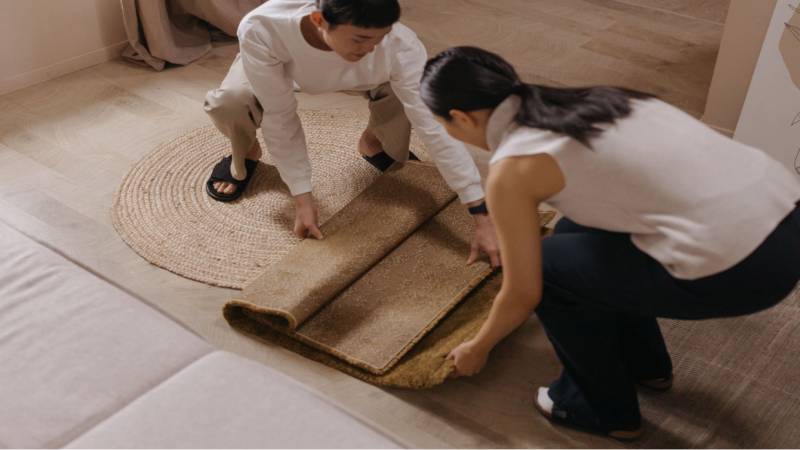
Most people plan their home around the big stuff.
Furniture. Paint. Lighting. Possibly a new kitchen if the budget stretches. There’s just one thing that’s always at the bottom of the home refresh list…
Rugs.
You know what’s crazy.. Rugs change a room quicker than just about anything else. They help finish a space. Add warmth. Define your style.
Better still?
They are nowhere near as expensive as buying a new sofa or painting every wall in your house. Still home owners treat rugs like an afterthought. Don’t do that.
See below to find out exactly why rugs should be considered when designing your home — and what small upgrades (such as rug pads) can make a big impact.
Let’s jump in.
In This Guide:
- Why Rugs Are More Than Just Decor
- The Real Value Of Rug Pads
- How Rugs Change A Room Instantly
- Common Mistakes To Avoid
- Choosing Rugs That Actually Last
Why Rugs Are More Than Just Decor
Rugs do a lot of heavy lifting in a home.
They cushion hard floors. They absorb noise. They add depth. They can also transform the feel of a room in minutes. The rug industry understands this — the U.S. carpet and rug market is set to grow at a 7.7% CAGR through 2030.
That’s not accidental. It indicates homeowners paying more attention to floor coverings in their designs.
Think about it:
The cold, echoey living room feels cozy and warm. The boring bedroom feels complete at last. Your dining room suddenly has somewhere to focus.
That’s a ton of value from a single upgrade.
The Real Value Of Rug Pads
Here’s a small upgrade that most people skip… rug pads.
They’re not very sexy. No one posts Instagram pictures of their rug pad. But they may be the single most helpful thing you can place under any rug in your house. Top retailers like Rugs Direct suggest a rug pad under almost every style of rug they sell — and for good reason.
What do rug pads actually do?
- Stop rugs from slipping on hard floors
- Add cushion underfoot for extra comfort
- Protect the floor from scratches and dents
- Extend the life of the rug itself
- Reduce noise in the room
That’s 5x wins from one very simple product.
And there’s a safety angle too…
CDC statistics show that over 45% of home falls are caused by unsafe carpets and rugs. A good rug pad clings to the floor and holds the rug flat — significantly reducing slip potential.
If there are children, elders, or pets in the home… This is mandatory.
Rug pads protect your rug too. Over time the friction of a rug on a hard floor wears away fibres from the underside. A pad cushions your rug so it ages slower and stays looking newer longer.
How Rugs Change A Room Instantly
Want to update a room without renovating? Roll out a new rug.
Ok, really though — it’s one of the quickest design swaps out there. Here’s why:
Rugs define a space.
The easiest way to define separate living and dining spaces in an open-plan home (without actually building walls) is with area rugs. Rugs visually cue your eye where one room stops and another starts.
Rugs add colour and pattern.
Paint if you want but add a statement rug if walls are plain and furniture is boring.
Rugs make rooms feel bigger (or cozier).
A big rug that spans nearly the entire floor opens up a small space. A rug tucked beneath a coffee table makes a spacious room feel cozy.
That’s clever design at a fraction of the cost of a full renovation.
Common Mistakes To Avoid
Most rug mistakes come from rushing the decision.
Here are the top ones that show up all the time:
Mistake #1: Buying a rug that’s too small.
Tip numero uno. If your rug is too small it will throw off the whole look of your room. Like your furniture is hovering. Try to have at least the front legs of your sofa and chairs on the rug.
Mistake #2: Skipping the rug pad.
As stated previously… blah blah blah just buy a pad already! Padless your rug will slide shift wrinkle and wear out quicker than you can imagine. Oh and its unsafe too.
Mistake #3: Choosing style over function.
A silk rug in a hallway with heavy foot traffic? Don’t do it. Consider the room. High traffic rooms should have durable fibers like wool or synthetics.
Mistake #4: Ignoring the rest of the decor.
If your sofa is busy, choose a solid rug. If your sofa is solid, choose a bold rug. Clashy patterns almost never look good together.
Avoid these four and the rug will look great for years.
Choosing Rugs That Actually Last
Needless to say, the rug industry is massive — the global area rugs market was valued at $38.18 billion in 2025. There are tons of options.
But not every rug is built the same.
Here’s what to look for:
- Material: Wool fabric lasts long and is easy to clean. Synthetic fabrics are inexpensive and resist stains. Cotton feels soft but does not last as long.
- Weave: Hand-knotted rugs last decades. Machine-made rugs are cheaper but shorter-lived.
- Size: Measure the space before shopping. Don’t guess.
- Pile: A low pile carpet is easier to clean. High pile carpet is softer but more difficult to clean.
Something else to keep in mind — home remodeling spending stayed above $600 billion through 2025. Homeowners are investing a lot of money into their homes these days, and a quality rug is a great addition to that investment.
Invest in a quality rug. You will save yourself money in the long run.
Bringing It All Together
Rugs might seem like a small detail in a big home planning project…
However, they’re heavier than they look. Throw pillows transform the mood, aesthetics and acoustics of any space. They can also safeguard floors. When used with complementary rug pads, they increase the safety of your home as well.
Quick recap:
- Rugs define spaces and add instant style
- Rug pads stop slips and protect floors
- Size, material, and placement matter more than price
- Avoid the common mistakes and rugs will last for years
Plan to spend more time on rugs during your next home planning session. You’ll be amazed at the difference they can make.