
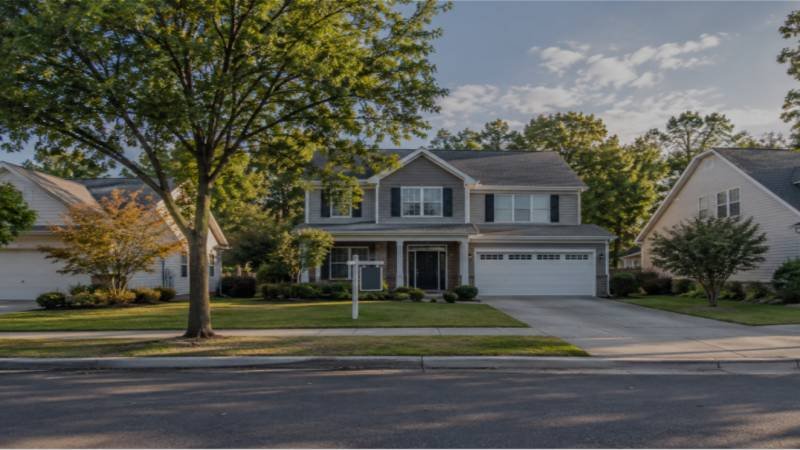
Knowing what a home is likely worth can help you plan a sale or purchase, refinance, or track equity. The most useful answer is rarely one fixed number. Start with the Kelley Blue Book Homes estimator, then compare its result with recent local sales, correct property details, and current market conditions.
A home’s market value is the price a willing buyer may pay under current conditions. It can differ from a tax assessment, an insurance replacement estimate, or the amount an owner needs to receive. Treat every early valuation as a researched range that becomes stronger as you add better local evidence.
Table Of Contents
- Why Home Value Estimates Differ
- How Automated Estimates Work
- How To Use Comparable Sales
- How To Read Local Market Trends
- How To Check Whether A Value Range Makes Sense
- Estimate, CMA, And Appraisal: What’s The Difference?
- When To Get A Professional Opinion
- Common Home Value Mistakes To Avoid
- A Simple Home Value Checklist
Why Home Value Estimates Differ
Two online tools can produce different figures because they may use different public records, sales databases, update schedules, comparable properties, and valuation formulas. One model may give more weight to a sale a few blocks away, while another may emphasize property size or broader neighborhood patterns. A 7 percent difference between estimates of $500,000 and $535,000 is a $35,000 gap, so it is worth investigating rather than automatically choosing the higher figure.
How Automated Estimates Work
An automated valuation model, or AVM, is a computer-generated estimate based on available data. It may evaluate square footage, bedroom and bathroom counts, year built, tax information, and nearby sales. The property valuations used during a mortgage application can include AVMs, broker opinions, and appraisals, each of which may rely on different comparable sales or serve a different purpose.
AVMs can be useful starting points when a neighborhood has many recent sales of similar homes. They may be less precise for rural properties, custom construction, historic homes, unusual layouts, or homes with significant interior updates that are not reflected in public records.
Before relying on an estimate, review the basic facts associated with the address. An incorrect bedroom count or missing finished basement can materially affect the result. Pay particular attention to:
- Finished living area, bedrooms, bathrooms, lot size, and parking.
- Home age, construction type, basement, attic, garage, and accessory dwelling space.
- Roof, HVAC, kitchen, bathroom, window, and electrical improvements.
- Permitted additions versus work that was never recorded.
- Views, waterfront access, traffic, noise, corner lots, and usable outdoor space.
How To Use Comparable Sales
Comparable sales, often called comps, are recently sold homes that are similar to yours. Start with closed sales in the same neighborhood or a closely similar nearby area. Match property type, size, age, bedroom count, condition, and lot characteristics as closely as possible. Closed sales generally provide better evidence of what buyers paid than active listings, while current listings show the competition a seller faces.
For example, three similar homes may have sold for $485,000, $495,000, and $505,000. If your home has a renovated kitchen but a smaller lot than the highest sale, a reasonable preliminary range may center near those results instead of simply using the top price. Price per square foot can be a helpful comparison, but it cannot fully account for condition, layout, or location.
How To Read Local Market Trends
National housing headlines do not always describe your block or school district. Review local inventory, days on market, pending sales, price reductions, and the relationship between list prices and final sale prices. Mortgage rates can also influence buyer budgets and demand. For a wider view, the house price indexes covering national, state, metro, county, and ZIP-level trends can provide useful context alongside local sales data.
How To Check Whether A Value Range Makes Sense
- Check more than one online estimate and record the date of each result.
- Confirm that public property details are accurate.
- Review at least three recent, relevant comparable sales.
- Identify upgrades, repair needs, or location drawbacks the data may miss.
- Compare the range with active, pending, and recently reduced listings.
- Use a supported range rather than anchoring to the highest number.
When estimates cluster closely, they may offer a practical starting point. Large gaps can signal thin sales data, incomplete records, unusual features, or a market that has changed since the comparable sales closed.
Estimate, CMA, And Appraisal: What’s The Difference?
Online Estimate
An online estimate is fast and useful for early planning, but it may not fully capture interior condition, workmanship, odors, deferred maintenance, or recent remodeling.
Comparative Market Analysis
A comparative market analysis, often prepared by a real estate professional, uses selected and adjusted comps to help shape a listing strategy. It can account for current competition and buyer behavior.
Professional Appraisal
An appraisal is a formal opinion of value prepared by a licensed or certified appraiser. Lenders may require one for a mortgage transaction, and appraisals may also be needed for estate, divorce, tax, or legal matters.
When To Get A Professional Opinion
Consider professional guidance when the home is custom or unusual, nearby sales are limited, renovations are substantial, a lender requires a valuation, or estimates differ widely. Professional input can reduce uncertainty, but it cannot guarantee the final price a buyer will pay.
Common Home Value Mistakes To Avoid
- Using the tax assessment as current market value.
- Selecting only the highest sale as the best comp.
- Comparing renovated homes with homes needing major repairs.
- Assuming every improvement returns its full cost in value.
- Ignoring traffic, views, lot usability, and other location details.
- Treating an online estimate as a formal appraisal.
A Simple 2026 Home Value Checklist
- Confirm public record details and list recent upgrades.
- Note repair needs that may affect buyer interest.
- Study three to six recent comparable sales.
- Review active, pending, and recently reduced listings.
- Check local inventory and selling speed.
- Decide whether a CMA or appraisal is appropriate.
- Keep the final answer as a well-supported range.
A reliable home value estimate comes from several forms of evidence. Online tools offer speed, comparable sales add local context, property records establish the basic facts, and professional opinions can help in complex situations. Compare the sources, identify major differences, and make decisions using current local information rather than a single attention-grabbing number.See More