Key Takeaways
- Audit equipment condition, workload, repair history, and operational importance before making investment decisions.
- Prioritize maintenance based on safety risks, the impact of downtime, and the critical role each asset plays.
- Compare repair, replacement, and automation options using total operating costs and long-term needs.
- Track availability, repair time, equipment performance, and safety indicators to identify recurring problems.
- Establish clear responsibilities for maintaining mixed fleets and resolving mechanical, electrical, and software failures.
- Use phased improvements, operator training, and backup procedures to strengthen reliability without unnecessary spending.
When critical warehouse equipment fails, the consequences can spread quickly. A stalled forklift can delay replenishment, a conveyor breakdown can disrupt packing, and a scanner outage can leave orders waiting even when inventory is available. These interruptions affect more than maintenance schedules. They can reduce throughput, increase labor costs, create safety risks, and jeopardize customer commitments.
Building a reliable warehouse equipment plan means looking beyond individual repairs to understand how every asset supports daily operations. By auditing equipment, prioritizing maintenance, evaluating repair and replacement decisions, and preparing for system interruptions, warehouse leaders can reduce avoidable downtime and make better use of their resources. A structured approach to reducing forklift downtime across a multi-site fleet can also help connect equipment reliability with productivity, service response, and consistent operating standards.
Start With a Complete Equipment Audit
Before approving a new purchase or automation project, create a current asset list. Include the equipment type, manufacturer, model, location, age, operating hours, duty level, and the workflow each asset supports. Record common failures, repair frequency, parts used, service delays, and whether a backup asset is available.
Then compare each machine with the job it performs. Consider load weight, travel distance, aisle width, floor conditions, attachments, shift count, and peak demand. A truck or conveyor may still operate, but it may no longer fit the facility’s current workload or layout.
Measure Performance Beyond Repair Counts
A repair total alone does not show whether an asset is dependable. Review performance by equipment class and work area, since fleet-wide averages can hide a recurring problem in one zone. Useful measures include:
- Equipment availability and unplanned downtime hours.
- Mean time between failures and mean time to repair.
- Repair cost per operating hour.
- Battery performance, charging interruptions, and energy use.
- Safety incidents, near misses, and operator-reported defects.
- Pallets, cases, or orders moved per labor hour where the equipment is used.
Build a Risk-Based Maintenance Schedule
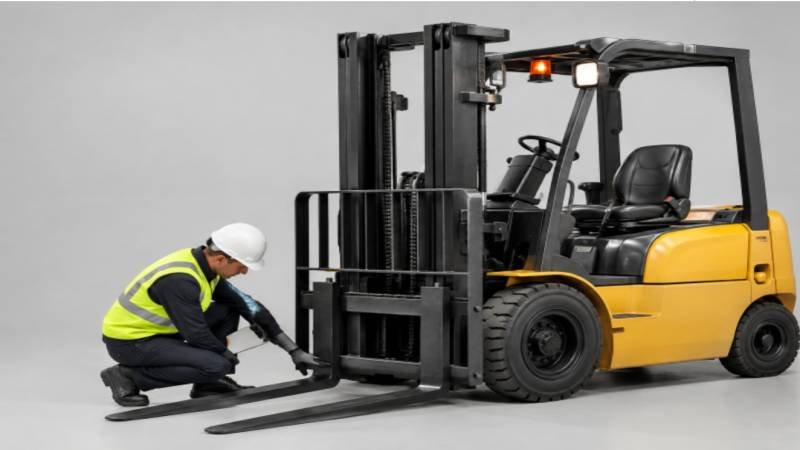
Reliable maintenance combines routine inspections with a clear view of operational risk. Start with operator checks for visible damage, leaks, alarms, tires, forks, chains, guards, sensors, and charging equipment. OSHA provides daily inspection checklists for powered industrial trucks that can help facilities structure forklift review routines around the equipment in use.
Use a consistent process: inspect the asset, record the finding, prioritize the issue, repair it, verify safe operation, and review repeat failures. A worn component on a lightly used backup machine may be less urgent than a minor fault on equipment that supports every outbound shift. Condition monitoring and sensor alerts can add value, but only when someone owns the response process and acts on meaningful warnings.
Decide When to Repair, Replace, or Automate
When Repair Is the Better Option
Repair may be appropriate when the asset returns to dependable service, replacement parts remain available, the cost is reasonable, and the equipment still suits the work. It is especially practical when a known issue can be corrected without creating repeated downtime or safety exposure.
When Replacement Is the Better Option
Replacement should be considered when failures become frequent, technical support is limited, repair costs rise, or the asset no longer supports the required load, throughput, or facility design. Repeated safety concerns should also trigger a formal review rather than another short-term repair.
When Automation Fits
Automation can be a strong fit for repetitive, predictable tasks with stable volumes and well-defined travel paths. It should not be treated as an automatic solution for every labor or throughput problem. Before moving forward, confirm that the operation has adequate space, power, data quality, system support, training capacity, and fallback procedures for interruptions.
Connect Equipment Decisions With Safety
Equipment planning should include operator-specific training, pedestrian routes, crossing points, blind spots, emergency stops, warning devices, and battery-charging areas. Operators and maintenance technicians should be involved in reviews because they see equipment behavior and workflow obstacles firsthand.
A faster process is not an improvement if it creates congestion, unclear traffic patterns, or new exposure to moving equipment. Reassess procedures after layout changes, new attachments, different equipment types, or automation deployments. Near-miss reports are particularly useful because they can reveal hazards before they become injuries or equipment damage.
Prepare for Mixed Fleets and Connected Systems
Many warehouses rely on a combination of conventional lift equipment, conveyors, robotics, connected sensors, and warehouse software. Define who owns each system and who is responsible for responding to mechanical, electrical, network, or software issues. Keep service records that identify both the equipment fault and the operational effect.
Critical workflows also need manual backup procedures. A facility should know how to receive, pick, replenish, or ship essential orders if a scanner network, charging system, conveyor control, or automated device becomes unavailable.
Create a Phased Improvement Plan
- First 30 days:Complete the asset audit, identify high-risk equipment, and review recent downtime.
- Days 31 to 60:Set performance measures, improve inspections, and establish a critical-parts list.
- Days 61 to 90:Address repeat failures, update training, and compare repair costs with replacement options.
- After 90 days:Pilot carefully selected monitoring or automation projects with clear success measures.
Common Questions
How often should equipment be inspected?
Inspection frequency should reflect the equipment type, manufacturer guidance, operating conditions, shift volume, and risk. Daily operator checks can work alongside scheduled technical service.
What is the most useful equipment metric?
No single measure tells the full story. Availability, downtime, repair time, cost, safety events, and operational output should be reviewed together.
Can smaller warehouses improve reliability without major capital spending?
Yes. Better inspections, clear service records, operator training, critical spare parts, and a focused list of high-priority assets can improve control before making larger investments.
Build Long-Term Reliability Through Better Planning
Reliable warehouse operations depend on equipment that is safe, available, and suited to the work it performs. By combining accurate asset records, risk-based maintenance, informed investment decisions, and clear backup procedures, businesses can address problems before they disrupt the entire workflow. The goal is not simply to keep machines running, but to build a warehouse that can maintain productivity, protect its people, and adapt confidently as operational demands change.See More