
Table of Contents
- Evolving Role of Accountants
- Technological Advancements in Accounting
- Importance of Advanced Education
- Impact on Business Strategy
- Meeting Industry Demands
- Final Thoughts
In today’s business world, accountants are stepping far beyond their traditional roles. The demands facing modern financial professionals require more than a knack with numbers. Instead, an advanced degree, such as the online master’s in accounting, prepares graduates to master technology, data analytics, and strategy. These skills enable them to move from the back office into positions of influence, driving the success and growth of their organizations in tangible ways.
With rapid economic changes and technological breakthroughs, businesses need professionals who understand not just what the numbers say, but what they mean for long-term goals. The shift in accountants’ roles from compliance to strategic leadership underscores the value of building a strong foundation in both technical and analytical capabilities. This is especially true in firms aiming to realize sustainable growth and innovation, even in volatile markets.
Evolving Role of Accountants
Historically, accountants were valued primarily for meticulous record-keeping, compliance, and the maintenance of accurate ledgers. While those functions remain important, businesses today look to their accountants for much more than that. They expect actionable insights and guidance derived from financial data. Accountants trained at an advanced level develop not only technical knowledge but also the interpretive and advisory skills required to shape a company’s future.
This change can be traced back to the growing complexity of the regulatory landscape and the increasing need for transparency. Businesses are now held responsible for a broader array of social, environmental, and governance outcomes. Accountants serve as trusted advisors, helping organizational leaders navigate these challenges, capitalize on new opportunities, and reduce risks by integrating financial and non-financial information.
Technological Advancements in Accounting
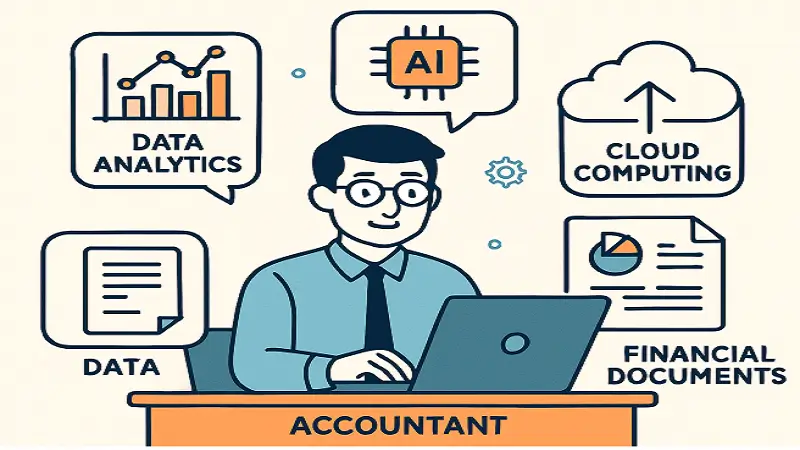
Technology is transforming the accounting field. Artificial intelligence (AI), machine learning, and advanced analytics offer unprecedented levels of automation and precision. These tools can handle time-consuming repetitive tasks, freeing up accountants to perform higher-level work such as strategic analysis. According to a Stanford University study, AI-assisted accounting has improved accuracy and enabled professionals to manage more complex datasets at scale, leading to more insightful business decisions.
Beyond automation, technology empowers accountants to contribute more directly to the company’s strategy. Cloud-based software, real-time dashboards, and predictive analytics are standard features in today’s finance departments. Professionals with advanced training understand how to leverage these technologies to quickly and efficiently meet changing priorities. As organizations place greater value on data-driven planning, having individuals with expertise in both finance and technology is critical.
Importance of Advanced Education
The new demands on accountants cannot be met solely with undergraduate training. Earning advanced credentials exposes professionals to specialized coursework in business analytics, forensic accounting, and financial strategy, fields essential for modern organizations. A focused curriculum, such as a Master of Science in Accountancy with a Business Analytics specialization in St. Thomas University, immerses students in the application of analytics and management information systems for real-world business settings. These programs go beyond theory, building skills in critical thinking, leadership, and ethical decision-making.
With these new skills, graduates are better able to bridge the gap between data and strategy. They can evaluate the financial implications of management decisions, forecast trends, and support department heads with credible, data-backed recommendations that drive revenue and efficiency.
Impact on Business Strategy
With the right educational foundation, accountants become key players in the boardroom. They analyze historical data to identify emerging patterns and offer recommendations aligned with the organization’s mission. Their insights help identify lucrative markets, flag inefficiencies, and support critical investment decisions. Accountants with graduate-level training also bring their expertise to risk assessment and regulatory compliance, ensuring that companies are well-positioned even during industry upheavals or economic downturns.
By participating in decision-making conversations from the start, these professionals help create more resilient and agile organizations. Businesses that involve accountants early in the strategic planning process achieve greater clarity in forecasting, budgeting, and growth projections, thereby gaining long-term competitive advantage.
Meeting Industry Demands
The importance of advanced accounting skills is reflected in hiring trends and projected job growth across the financial sector. Employers seek candidates who are not only comfortable with numbers but also with technology platforms and analytics tools. The U.S. Bureau of Labor Statistics projects steady demand for accountants and auditors, especially those with specialized certifications or advanced degrees. Organizations are willing to invest in talent that can transition easily between governance, compliance, and advisory functions.
Beyond technical proficiency, companies also want professionals who can think creatively and communicate complex information simply. Advanced accounting programs prioritize these soft skills, preparing graduates to lead cross-functional teams, present compelling business cases, and drive organizational change in a competitive marketplace.
Final Thoughts
Advanced accounting degrees equip professionals to meet the most pressing business challenges of today and tomorrow. When accountants combine deep technical expertise with strategic acumen, they help their organizations remain agile, innovative, and successful. As the field continues to evolve, the value of multidimensional accounting professionals who can turn insight into action will only increase.See More