
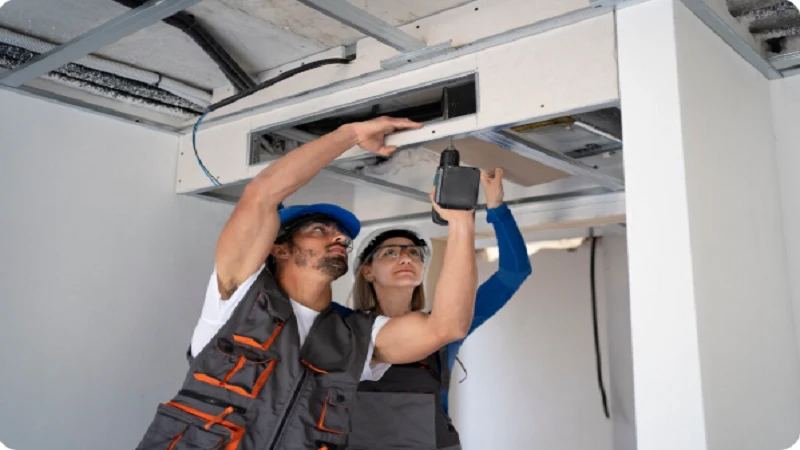
When your AC stops working, one of the first questions is usually, “How long is this going to take?” The honest answer depends on the problem, the parts involved, the condition of the system, and how quickly the issue is diagnosed. Homeowners looking into repairs often find that some fixes are quick, while others need deeper troubleshooting, replacement parts, or temporary cooling support while the main system is brought back online.
Why AC repair timelines can vary
AC systems have electrical parts, refrigerant lines, motors, sensors, coils, fans, filters, drains, and thermostats all working together. A small issue in one area can look similar to a bigger problem somewhere else. For example, weak airflow might come from a dirty filter, a failing blower motor, frozen coils, or ductwork restrictions.
That is why the first part of any repair is diagnosis. A technician needs to check what the system is doing, what it is not doing, and whether the issue is isolated or connected to a larger failure. A clear diagnosis can prevent wasted time and avoid replacing parts that are not actually causing the problem.
Quick AC repairs that may take under an hour
Some AC problems can be fixed fairly quickly once the technician confirms the cause. Thermostat issues, clogged filters, tripped breakers, loose wiring, blocked drain switches, or simple capacitor replacements may take less than an hour in many cases.
These are often the best-case repairs because the problem is easy to access and does not require major disassembly. Even so, quick fixes should still be checked carefully. A tripped breaker, for instance, may seem minor, but if it happens repeatedly, the system could have an electrical fault or an overworked component.
Repairs that usually take a few hours
Other problems take longer because the technician has to test multiple components, open the unit, clean parts, or safely replace electrical or mechanical pieces. Blower motor issues, contactor replacements, refrigerant leak checks, drain line clearing, frozen coil thawing, and fan motor repairs may take a few hours.
Refrigerant-related work can be especially time-sensitive because low refrigerant is usually a symptom, not the main problem. The system may have a leak that needs to be found before the unit is charged again. Skipping that step may get the AC running temporarily, but the same problem can return.
Bigger repairs that may take a full day or longer
Major failures can take a full day or more, especially when the compressor, evaporator coil, condenser coil, control board, or refrigerant lines are involved. These repairs may require careful testing, recovery of refrigerant, part replacement, system evacuation, recharging, and performance checks.
In some cases, the timeline depends on whether the right part is available. A common part may be replaced the same day. A less common part may need to be ordered, which can stretch the repair into several days. This is where experienced AC repair services become valuable because the right diagnosis early on can reduce delays and help you understand whether a repair or replacement makes more sense.
When temporary cooling may be needed during longer repairs
When a major AC failure affects a large property, business, facility, production area, event space, medical environment, or building with sensitive equipment, waiting several days for a repair can create bigger problems than discomfort. This is where temporary chiller rental services can fit naturally into the repair plan. If the main cooling system is down because of a compressor failure, delayed replacement parts, refrigerant issues, or a large-scale mechanical problem, arranging temporary cooling through https://www.aercosystems.com/ can help keep the space stable while the permanent system is being inspected, repaired, or replaced. This can help protect equipment, maintain safer indoor conditions, keep employees or occupants more comfortable, and reduce operational disruption. It is especially useful when cooling cannot simply be paused until repairs are finished. The need is not limited to commercial spaces either. Larger residential properties, multi-use buildings, or spaces with critical cooling needs may also benefit from a temporary setup. The key is timing. If the repair estimate suggests the system may be down longer than a day or two, asking about temporary cooling options early can prevent a stressful situation from becoming more expensive or difficult to manage.
Why waiting can make AC problems worse
A struggling AC often gives warning signs before it fully breaks down. Warm air, short cycling, strange noises, weak airflow, burning smells, ice buildup, water leaks, or sudden increases in energy use should not be ignored.
Running the system while something is wrong can put extra strain on expensive parts. A worn capacitor can affect the motor. Low refrigerant can cause coils to freeze. A blocked drain can shut the system off or cause water damage. The longer the unit runs under stress, the more likely a small repair becomes a larger one.
Getting the right answer starts with the right inspection
Most AC repairs fall somewhere between under an hour and a full day, but the real timeline depends on the exact cause. Simple electrical fixes may be fast. Mechanical failures, refrigerant leaks, and parts delays take longer. If your AC is acting up, the safest move is to get it checked before the issue spreads through the system. A clear inspection gives you a realistic timeline, helps you avoid guesswork, and makes it easier to plan your next step with confidence.See More