Launching a hardware startup is exciting but it’s also unforgiving.
Unlike software, you can’t “patch” a physical product after it ships. A minor miscalculation in dimensions, materials, or internal assembly can lead to failed prototypes, delayed production, investor concerns, or expensive recalls.
That’s why 3D Modeling for Product Design has become a non-negotiable step for hardware startups in the UK and globally. With advanced 3D Product Modeling Services, founders can validate ideas, reduce engineering risk, and move from concept to market with far greater confidence.
In 2026, as product innovation accelerates and manufacturing margins tighten, digital modeling is not just a design tool it’s a survival strategy.
Let’s explore why.
Why Is Hardware Product Development So Risky?
Hardware startups face unique challenges:
- High upfront manufacturing costs
- Complex supply chains
- Strict regulatory standards
- Lengthy prototyping cycles
- Physical inventory risk
According to data from CB Insights, one of the leading reasons startups fail is building products without proper validation or market fit. For hardware companies, that validation includes technical feasibility.
This is where 3D Modeling for Product Design makes a measurable difference.
What Is 3D Modeling for Product Design?
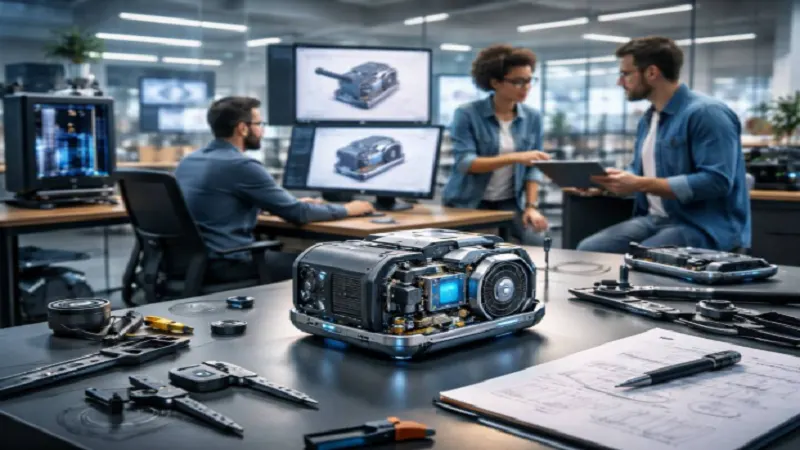
At its core, 3D Modeling for Product Design involves creating precise digital representations of a product before it’s physically manufactured.
With professional 3D Product Modeling Services, startups can:
- Visualize internal and external components
- Test assembly fit
- Simulate movement or stress
- Validate dimensions
- Identify design flaws early
When integrated with 3D CAD Modeling Services, these models become intelligent digital prototypes capable of predicting real-world performance.
How Does 3D Product Modeling Reduce Prototyping Costs?
Prototyping is often the most expensive stage for hardware startups.
Without digital validation, companies may produce multiple physical prototypes to correct errors.
Advanced 3D CAD Modeling and Design Services reduce that cycle by enabling:
- Virtual testing before fabrication
- Accurate tolerance analysis
- Early detection of interference issues
- Material optimization
This leads to:
- Fewer production revisions
- Reduced material waste
- Faster time-to-market
- Lower R&D expenditure
For UK startups navigating competitive investor environments, efficiency is everything.
Why Is Precision So Important for Hardware Startups?
Precision determines scalability.
A design that works in a small prototype must also function reliably in mass production. Minor inaccuracies can multiply into major issues when manufacturing at scale.
Custom 3D Modeling Services allow startups to tailor models to exact material properties, mechanical constraints, and manufacturing processes.
This helps ensure:
- Components align correctly
- Fasteners fit precisely
- Electronics integrate smoothly
- Structural strength meets requirements
In industries like consumer electronics, IoT devices, and wearable technology, tolerances are extremely tight. Digital modeling ensures those tolerances are maintained.
How Are UK Startups Leveraging Digital Modeling?
The UK has seen significant growth in hardware innovation across sectors such as:
- Clean technology
- Medical devices
- Robotics
- Sustainable consumer goods
Government-backed innovation initiatives and digital adoption frameworks have encouraged advanced design practices.
The UK Research and Innovation (UKRI) organisation supports technology-led startups focused on product innovation. In this environment, accurate digital modeling enhances funding applications and prototype validation.
Investors are increasingly expecting detailed 3D visualisations and digital simulations before committing capital.
How Does 3D Modeling Improve Investor Confidence?
Hardware investors are cautious.
They want proof that:
- The product is technically feasible
- The design is manufacturable
- Costs are predictable
- Supply chains are realistic
Professional 3D Modeling Design Services provide high-quality visual assets and technical documentation that improve pitch credibility.
Detailed product renders, exploded views, and simulation data demonstrate that the startup has thoroughly engineered its concept, not just imagined it.
Can 3D Modeling Help with Manufacturing Readiness?
Absolutely.
Manufacturing readiness is one of the biggest hurdles for startups transitioning from prototype to production.
With integrated 2D & 3D Modeling Services, startups can generate:
- Shop drawings
- Assembly instructions
- Bill of materials (BOM)
- CNC-ready files
- Compliance documentation
This alignment between design and fabrication reduces friction when onboarding manufacturing partners.
How Do 3D CAD Modeling Services Support Compliance?
Hardware products often require certification, especially in the UK and EU markets.
Whether dealing with CE marking, safety standards, or environmental compliance, accurate documentation matters.
CAD Modeling Services help ensure:
- Dimension consistency
- Proper enclosure design
- Structural integrity
- Heat management validation
Digital models simplify regulatory submission processes and minimize rejection risks.
How Is Automation Changing 3D Product Modeling?
Modern 3D CAD Modeling Services increasingly incorporate automation and AI-driven features, including:
- Parametric updates
- Design optimization suggestions
- Automated clash detection
- Real-time rendering
This allows startups to test multiple design variations quickly.
According to insights from PwC UK, digital adoption in manufacturing is improving operational efficiency and innovation capabilities. For startups, this translates to faster iteration cycles and improved product refinement.
Why Are Startups Outsourcing to a 3D Modeling Company?
Building an in-house design team is expensive.
Early-stage startups often lack the budget for full-time CAD engineers.
Partnering with a specialized 3D Modeling Company provides:
- Access to expert-level modeling
- Faster turnaround times
- Flexible scaling
- Reduced overhead
Outsourced 3D Product Modeling Services enable founders to focus on strategy, marketing, and fundraising while experts handle technical precision.
What Happens Without Proper 3D Modeling?
Skipping professional modeling can lead to:
- Prototype failures
- Manufacturing delays
- Cost overruns
- Quality issues
- Investor hesitation
For hardware startups operating on tight budgets and timelines, these setbacks can be fatal.
In contrast, investing in robust 3D Modeling for Product Design significantly improves risk management.
How Does 3D Modeling Support Sustainable Product Development?
Sustainability is becoming a key differentiator in the UK and European markets.
Digital modeling supports eco-conscious design by:
- Reducing material waste
- Optimizing lightweight structures
- Simulating energy efficiency
- Supporting recyclable component design
Sustainable engineering begins at the design stage and digital tools make that possible.
What’s the Future of 3D Modeling for Hardware Startups?
The future of 3D Modeling for Product Design includes:
- Cloud-based collaboration
- Digital twin integration
- AI-enhanced generative design
- Real-time supply chain simulation
- Seamless integration with additive manufacturing
As production technologies evolve, digital modeling will become even more central to startup success.
In competitive global markets, hardware founders must move fast without compromising precision.
Digital modeling makes that balance possible.
Final Thoughts
For hardware startups, every design decision carries financial weight.
3D Modeling for Product Design and professional 3D Product Modeling Services provide:
- Greater engineering accuracy
- Faster prototyping cycles
- Reduced manufacturing risks
- Stronger investor confidence
- Improved scalability
Across the UK’s growing innovation ecosystem and globally digital modeling is not a luxury. It is foundational infrastructure for hardware success.
Many forward-thinking startups now collaborate with experienced UK CAD specialists who combine technical precision with scalable workflows, ensuring products move confidently from concept to production.
In hardware development, precision is power and digital modeling delivers both.
FAQs:
1. What is 3D Modeling for Product Design?
3D Modeling for Product Design involves creating detailed digital representations of physical products to test functionality, dimensions, and performance before manufacturing begins.
2. Why is 3D Modeling important for hardware startups?
Hardware startups use 3D Modeling for Product Design to reduce prototyping errors, validate manufacturability, improve investor confidence, and speed up time-to-market.
3. How do 3D Product Modeling Services reduce development costs?
3D Product Modeling Services allow startups to simulate and refine designs digitally, reducing the need for multiple physical prototypes and minimizing material waste.
4. Are 3D CAD Modeling Services necessary for early-stage startups?
Yes. Even early-stage startups benefit from professional 3D CAD Modeling Services to ensure precision, structural integrity, and scalability before mass production.
5. How do UK hardware startups benefit from 3D modeling?
UK startups leverage 3D CAD Modeling and Design Services to meet compliance standards, align with manufacturing partners, and secure funding through detailed visual presentations.
6. Can 2D drawings still be used alongside 3D models?
Yes. Integrated 2D & 3D Modeling Services generate accurate technical drawings from 3D models for manufacturing, compliance, and documentation purposes.
7. Should startups outsource to a 3D Modeling Company?
Partnering with a specialized 3D Modeling Company provides access to expert CAD Modeling Services without the cost of building a full in-house design team.
8. How does 3D modeling improve investor confidence?
Detailed product renders, exploded views, and technical simulations demonstrate feasibility, manufacturability, and design validation to potential investors.
9. Which industries benefit most from 3D Modeling for Product Design?
Industries such as consumer electronics, medical devices, robotics, automotive, IoT hardware, and industrial equipment benefit significantly from advanced modeling solutions.
10. What is the future of 3D Product Modeling Services?
The future includes AI-driven generative design, digital twins, cloud collaboration, rapid prototyping integration, and sustainable product modeling practices.See More