
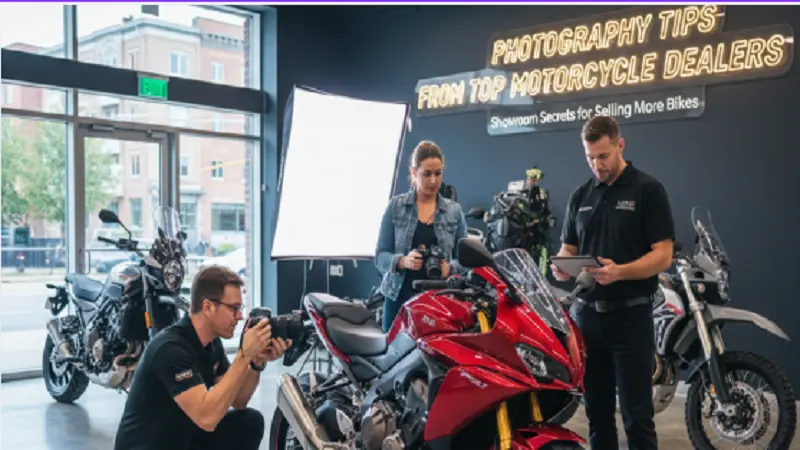
If you want my honest take after years in this business, it’s this: great photos sell motorcycles.
Not “good enough” photos. Not “quick iPhone snap in the driveway” photos. I’m talking clean, intentional, trust-building images that make a buyer stop scrolling and think, “That’s the one.”
I’ve watched listings with professional-level photos move twice as fast as average ones. I’ve also seen them pull 10–15% stronger offers. That’s not luck. That’s psychology. Buyers can’t touch the bike online…your photos are the handshake.
Here’s exactly how I recommend you approach it.
Start With Light: It’s Everything
You do not need a $5,000 camera setup to sell motorcycle inventory. A recent smartphone with a 12MP+ camera is more than enough. But lighting? That’s non-negotiable.
If you’re shooting outdoors, aim for mid-morning or late afternoon. That “golden hour” glow gives the tank depth and makes paint pop without harsh reflections. Cloudy days are actually fantastic—nature’s softbox.
Keep the sun behind you. If it’s midday, put the bike in the shade and yourself in the light. That trick alone eliminates 80% of glare issues I see in listings.
Shooting indoors? A simple two-light setup works beautifully. Place your main light at a 45-degree angle to the front or side of the bike. Add a softer fill light on the opposite side to eliminate harsh shadows around the engine and undercarriage. Even affordable LED panels can create a clean, dealership look if positioned correctly.
Avoid overhead fluorescent garage lights. They cast a green tint that screams “amateur.”
Control the Background
Here’s a rule I tell every seller: If the background distracts, it subtracts.
Your bike should be the hero and not the trash can, not the minivan, not your kid’s basketball hoop.
Clean, neutral backdrops work best:
- Plain garage wall
- Empty lot
- Industrial brick
- Open field
Concrete and brick complement metal beautifully. And for the love of resale value, straighten the front wheel before you shoot.
If you have a paddock stand or pit stand, use it. A properly elevated bike looks intentional and powerful.
Shoot 25+ Photos: Minimum!
This is where most people get lazy. If you want to sell motorcycle listings quickly, volume and variety matter. Buyers want to inspect everything.
Here’s the structure I recommend:
1. Full Bike Shots (8–10 images)
- Left side
- Right side
- Front
- Rear
- Four 45° corner angles
- One low “hero” shot
Stand 3–5 feet back. Shoot horizontally (landscape mode). And yes, that low 45-degree angle makes a huge difference. It gives the bike presence.
If you’re listing something performance-focused like a Yamaha YZF-R1, low angles emphasize the winglets, stance, and aggression buyers love.
2. Close-Ups That Build Trust (10+ images)
This is where you win serious buyers.
Photograph:
- Tire tread (clear and sharp)
- Chain and sprocket
- Brake rotors and calipers
- Odometer
- VIN plate
- Fluids and engine cases
These images quietly say, “This bike is ride-ready.” That’s gold for both private sellers and Motorcycle dealers trying to justify asking price.
3. Detail Shots (5+ images)
Capture:
- Engine components
- Exhaust
- Dash (no warning lights on)
- Grips and levers
- Seat condition
If the bike has upgrades, showcase them properly. Don’t just mention “aftermarket exhaust” and show it clearly.
Honesty Sells Faster
Hiding flaws slows deals.
If there’s a scratch, photograph it clearly. Label it “cosmetic.” Show scale by placing a finger nearby. If there’s a minor rash from a tip-over, say so, and include a repair quote if you have one.
Buyers appreciate transparency. In fact, I’ve seen listings close faster when sellers openly acknowledge small imperfections. It builds confidence.
Motorcycle dealers who master this approach earn repeat customers. Trust compounds.
Use Simple Editing And Not Filters
After you shoot, spend five minutes polishing the images.
Free apps like:
- Snapseed
- Lightroom Mobile
- Photopea
- TouchRetouch
Work perfectly. Adjust white balance, brightness, shadows, and contrast. Add a subtle S-curve for depth. Sharpen lightly. Remove distracting background clutter if needed.
But don’t overdo it. No heavy filters. Buyers can smell fake lighting and oversaturated paint from a mile away.
Export JPEGs at 2000px wide. Sequence your listing logically:
- Hero shot first
- Full-bike angles
- Details
- Close-ups
- Wear-and-tear disclosures
That flow mimics how someone would walk around the bike in person.
Bonus: Add a 2-Minute Walkaround Video
This is the secret weapon. Record a cold start, idle, light throttle blips, dash sweep, and finally, slow walkaround.
Short videos dramatically increase inquiries. On social platforms, especially, they outperform still images.
If you’re trying to sell motorcycle inventory during peak season, like spring, when tax refunds hit, this can multiply engagement.
Why This Matters More Than You Think
Online buyers are skeptical. Scams exist. Overpriced listings exist. Hidden damage exists.
Professional photography says:
- “This seller is serious.”
- “This bike has been cared for.”
- “This listing is worth your time.”
That perception alone can boost offers by 10–15%.
Motorcycle dealers who systematize this process often see inventory turn faster than competitors who rely on rushed lot photos. And private sellers who follow these steps often match dealership-level presentation.
In a crowded market, presentation is leverage.
Key Takeaways:
- Clean background. Natural light. 25+ honest photos. Logical order. Short video.
- Do that consistently, and you won’t just list bikes.
- You’ll sell motorcycle listings faster, with stronger offers, and far fewer “Is this still available?” tire-kickers.
- And that’s the difference between hoping for a sale… and controlling it.
See More: betterthistechs