
Key Takeaways
- Plan for year-round interest with flowers, foliage, berries, grasses, and winter structure.
- Assess sunlight, soil, drainage, and climate before choosing plants.
- Build a strong framework with trees, shrubs, pathways, and other permanent features.
- Select plants by role and repeat varieties for a balanced, cohesive design.
- Include seasonal highlights for spring, summer, fall, and winter.
- Support wildlife with varied flowering plants, seed heads, and safe water sources.
- Reduce maintenance by grouping plants with similar needs, mulching, and allowing room for mature growth.
- Monitor the garden throughout the year and adjust plant choices and care as needed.
A four-season garden is designed to offer something worth noticing in every month, not only when summer flowers are at their peak. Spring bulbs, summer foliage, autumn seed heads, winter bark, evergreen form, and berries can all share the work. The result is a landscape that feels intentional from the first thaw through the quietest part of winter. Whether you are refreshing a front bed, designing a backyard border, or planning a family outing to find pumpkins near me, seasonal thinking can make every outdoor space feel more connected to the time of year. You do not need a large property or dozens of unusual plants. You need a clear structure and a sequence of plants that perform at different times.
Why Four-Season Gardens Work
Flowers are only one part of a successful garden. Leaves create color and contrast, grasses add movement, shrubs provide shape, and seed heads, fruit, stems, and bark become more visible after blooms fade. Rather than expecting every plant to look dramatic all year, use succession. One group of plants can lead in spring, another in summer, and another when cooler weather arrives. Well-planned public landscapes often combine woody plants, perennials, ground covers, and seasonal displays. Home gardeners can use the same principle on a smaller scale by repeating reliable forms and leaving room for each plant to mature.
Start With the Site
Start with observation, not a shopping list. Spend time watching where sun falls in the morning and afternoon, where water stands after rain, and which views matter most from windows, patios, paths, and the street. Before selecting perennials and shrubs, compare your location with winter temperature zones to choose plants suited to your area’s typical cold conditions.
Site-Planning Checklist
- Record full-sun, partial-sun, and shade areas.
- Identify dry spots, wet areas, slopes, and compacted soil.
- Measure beds and note the mature width and height plants will need.
- Test soil if you are unsure about nutrient levels or pH.
- Mark important views from indoors and along frequently used walkways.
Build the Garden Framework
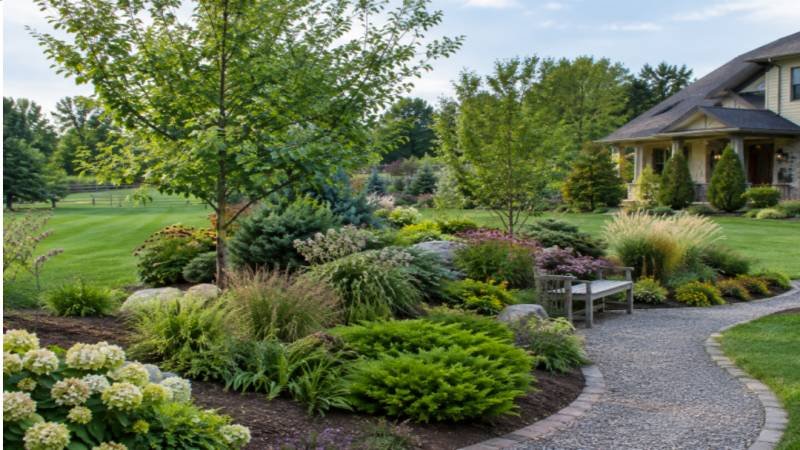
The framework is what keeps a garden attractive when annuals are gone and herbaceous perennials are dormant. Begin with a few long-lasting elements, such as small trees, evergreen shrubs, ornamental grasses, containers, paths, edging, a bench, or a low wall. These features establish scale and give the eye somewhere to rest. Arrange plants in layers. Place taller plants toward the rear of a border or in the center of an island bed, medium plants in front of them, and low growers near paths. Repeat a few plant types instead of planting one of everything. Repetition creates a calmer design and makes seasonal changes easier to notice.
Plan Seasonal Interest
Create a simple four-part calendar before you plant. Aim for at least two sources of interest in each season. These may be flowers, foliage, fruit, structure, texture, or movement. The University of Delaware Botanic Gardens shows how layered collections of trees, shrubs, and herbaceous plants can make a landscape appealing across the seasons.
Spring
Use bulbs, early-flowering shrubs, and emerging foliage near entryways and windows. Early blooms can bring welcome color after winter, while fresh leaves provide a second layer of interest once flowers pass.
Summer
Combine flowering perennials with foliage plants. Choose several bloom shapes and heights, then repeat colors in groups rather than scattering single plants throughout the bed. Foliage helps the garden remain full when individual flowers finish.
Fall
Plan for more than changing leaves. Late flowers, berries, ornamental grasses, and standing seed heads can keep borders active after much of the summer display has slowed. Grasses are especially useful because they add motion in breezy weather.
Winter
Winter interest often comes from evergreen leaves, branching patterns, colorful stems, persistent fruit, and dried grass plumes. Put these features where they can be seen from a kitchen window, front door, or path you use regularly.
Choose Plants by Role
Select plants for the job they will perform, rather than buying only what looks good at the nursery that day. A balanced bed can include:
- Anchors:Small trees, large shrubs, or evergreen plants that provide year-round shape.
- Seasonal performers:Plants grown for flowers, fruit, fall color, or notable spring growth.
- Texture plants:Grasses, ferns, broad leaves, fine foliage, or upright forms.
- Edge plants:Low-growing plants that define paths and soften border lines.
- Fillers:Dependable plants that connect larger features and cover open soil.
Add Wildlife-Friendly Features
A garden can be attractive and useful to wildlife at the same time. Include plants with different flowering periods and bloom forms, retain selected stems through winter, and offer a shallow water source with stones or a gentle edge. Small areas of bare soil can also provide nesting space for some ground-nesting insects where conditions are safe. A wildlife-friendly garden does not need to appear neglected. Defined paths, crisp edges, repeated plant groupings, and a limited color palette can make a habitat-focused planting look polished and well-cared for.
Reduce Maintenance From the Start
Lower maintenance begins with matching plants to their conditions. Group plants with similar light and moisture needs, allow enough room for mature growth, and mulch open soil to help limit weeds and reduce moisture loss. Water new plants deeply during establishment, then adjust care based on weather and each plant’s needs. Keep a brief garden journal throughout the year. Note bloom periods, empty-looking areas, plants that outgrow their spaces, and places that need more winter structure. Those observations are more useful than trying to remember the garden at the end of the season.
Avoid Common Planning Mistakes
- Planting only for summer:Include spring bulbs, fall performers, and winter structure.
- Ignoring mature size:Check spacing before planting to avoid crowding later.
- Using too many single specimens:Repeat key plants in groups for a stronger visual effect.
- Putting plants in unsuitable conditions:Match sun, soil, drainage, and moisture needs.
- Removing every stem in fall:Leave selected seed heads and grasses for texture.
- Forgetting indoor views:Place winter-interest plants where they remain visible in colder months.
Use a Simple Action Plan
- Survey the site and identify light, drainage, wind, and important views.
- Choose structural plants and hardscape features first.
- List two or more sources of interest for each season.
- Choose plants by role and repeat dependable selections.
- Prepare soil, correct drainage concerns, and plant with mature size in mind.
- Mulch, water consistently during establishment, and review the garden monthly.
Final Thoughts
A four-season garden develops over time, but its long-term success begins with a thoughtful plan that considers the changing needs of plants throughout the year. Rather than focusing only on colorful summer flowers, aim to create a balanced landscape that offers something interesting in every season, from fresh spring growth and vibrant summer blooms to autumn foliage and the structure of winter branches. Start by building a strong framework with trees, shrubs, pathways, and other permanent features that give the garden shape and visual interest even when flowers are not in bloom. Select plants suited to your site’s sunlight, soil conditions, drainage, and climate to promote healthy growth and minimize unnecessary maintenance. Then layer in seasonal highlights with a mix of flowering perennials, ornamental grasses, bulbs, evergreen plants, and species valued for their foliage, berries, or distinctive bark. Consider how plant heights, textures, colors, and bloom times will complement one another as the months change. Regular pruning, mulching, watering, and seasonal cleanup will help maintain the garden while allowing plants to establish themselves naturally. It is also wise to leave room for adjustments as you discover which plants thrive and which areas need improvement. With patience, careful plant selection, and a few well-chosen layers, your garden can become a welcoming outdoor space that offers color, texture, wildlife value, and visual interest throughout 2026 and beyond. The goal is not to make every corner look perfect at all times, but to create a living landscape that continues to evolve beautifully with each passing season.See More